
Beyond 2000

The Show
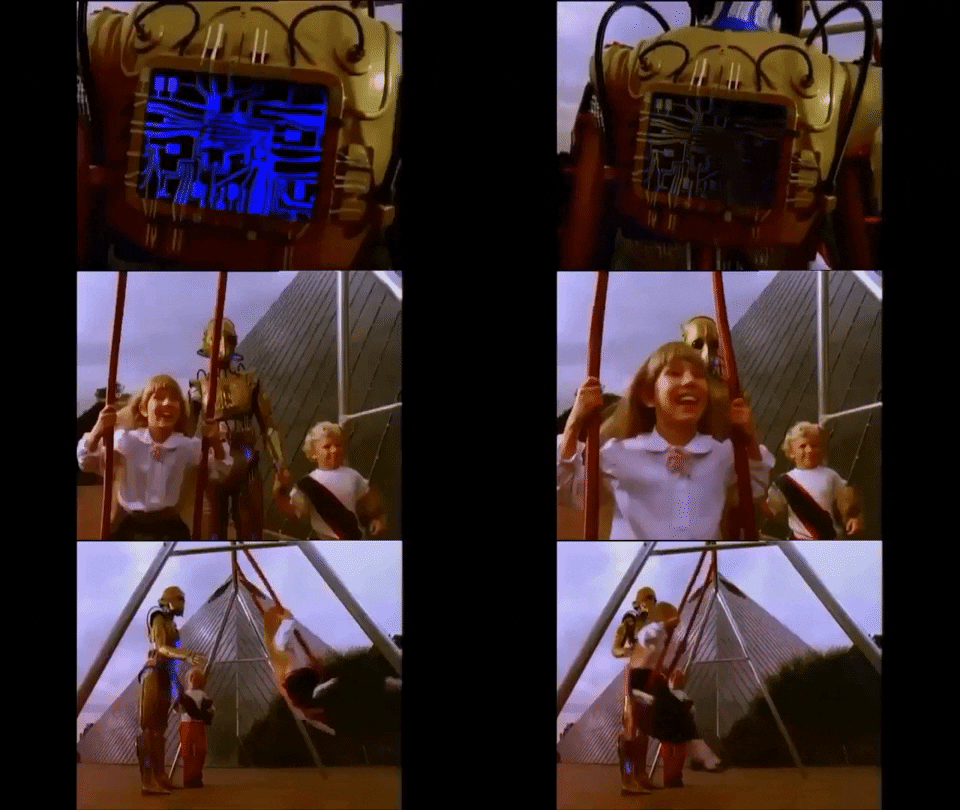
In the 1980s, amidst a rapidly advancing technological landscape, a television show emerged that captured the imaginations of audiences worldwide and offered a glimpse into the possibilities of the future. “Beyond 2000,” a documentary-style series, provided an exciting and informative journey into the world of cutting-edge science and technology, forecasting what life might be like beyond the turn of the century.
Premiering in 1981, “Beyond 2000” was initially an Australian production known as “Towards 2000.” It quickly gained international popularity and was later rebranded with its well-known title, “Beyond 2000.” The show’s format centered on exploring the most groundbreaking innovations, discoveries, and technological advancements that were shaping the world during the 1980s and beyond.
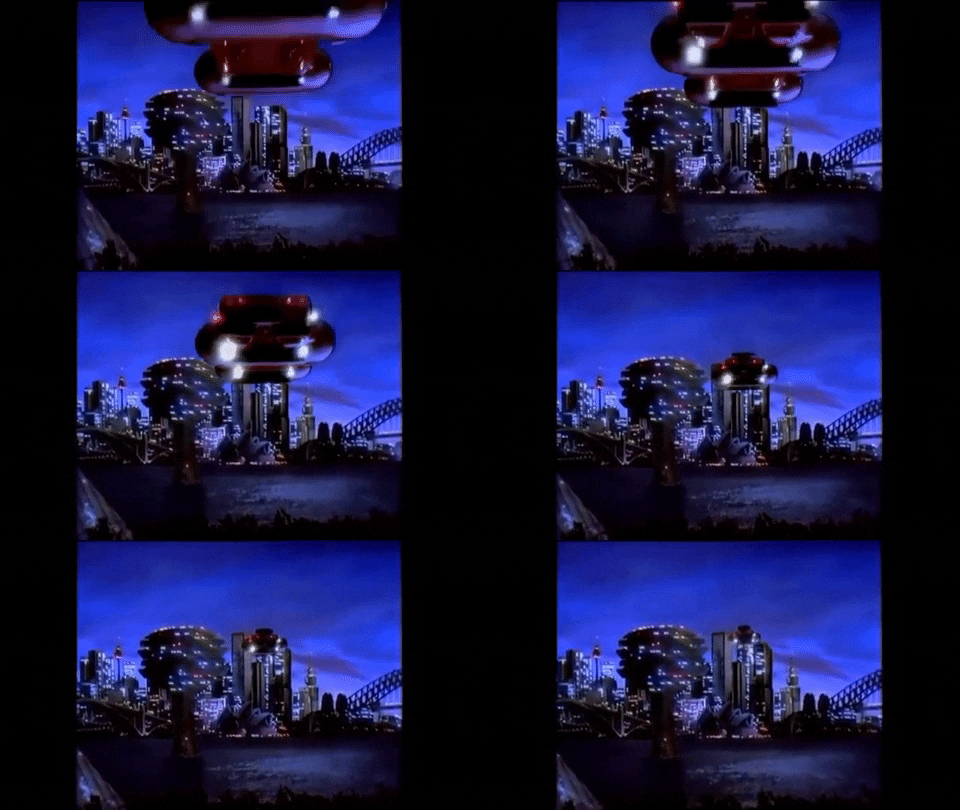
Each episode of “Beyond 2000” delved into a wide array of subjects, ranging from medicine and transportation to space exploration and environmental conservation. The show featured a diverse team of reporters and hosts who traveled the globe to bring viewers fascinating stories and interviews with scientists, engineers, and inventors at the forefront of progress.
One of the show’s strengths was its ability to present complex scientific concepts and technical advancements in a way that was accessible to a general audience. The use of captivating visuals, engaging storytelling, and real-life demonstrations made “Beyond 2000” both informative and entertaining. As a result, the show appealed not only to science enthusiasts but also to curious viewers seeking a glimpse of the future.
“Beyond 2000” also had a profound impact on popular culture and the public’s perception of technology. It sparked a sense of wonder and curiosity, encouraging viewers to dream big and envision the possibilities that the future might hold. The show’s optimistic and forward-looking approach inspired countless individuals, including students, inventors, and scientists, to pursue careers in science and technology.
Moreover, “Beyond 2000” served as a historical record of the technological achievements of its time. It chronicled pivotal moments in space exploration, such as the Space Shuttle program, and highlighted groundbreaking medical advancements, including the development of life-saving medical devices and procedures.
The show’s impact extended far beyond its original airings. “Beyond 2000” went on to inspire similar programs in various countries, contributing to the rise of science and technology-focused television. It also paved the way for future science and documentary series that continue to explore the frontiers of human knowledge and innovation.

Conclusion
While “Beyond 2000” was firmly rooted in the 1980s, its vision of the future resonated with audiences far beyond that era. Although some of the predictions made on the show may not have materialized precisely as anticipated, the program’s core message – the importance of embracing technology and innovation to shape a better world – remains relevant and crucial to this day.
In conclusion, “Beyond 2000” was a trailblazing television show that captivated audiences with its exploration of science and technology in the 1980s. It not only provided a captivating glimpse into the potential future but also left a lasting impact on how society perceived and embraced technological progress. “Beyond 2000” encouraged us to dream, to imagine, and to believe that, with the right minds at work, we could indeed step boldly beyond the horizon of what was once considered impossible.
Presenters
- Sonia Humphrey
- Iain Finlay
- Jeff Watson
- David Flatman
- Carmel Travers
- Chris Ardill-Guinness
- Simon Reeve
- Amanda Keller
- Andrew Carroll
- Maxine Gray
- Anthony Griffis
- Dr. Caroline West
- Dr. John D’Arcy
- Simon Nasht
- Sharon Nash
- Bryan Smith
- Tracey Curro
- Andrew Waterworth
- American versions were presented by Henry Tenenbaum, Dave Marash, and Susan Hunt.