
Orchestral Manoeuvres in the Dark

Orchestral Manoeuvres in the Dark or otherwise known as OMD (in short) must be one of the most underrated synth/pop bands from the eighties.

The English electronic band was founded in Wirral, Merseyside, in 1978. Andy McCluskey and Paul Humphreys were the founding members. Martin Cooper and Stuart Kershaw were the other two members that formed the group.
McCluskey was the only member that remained in the group permanently. The group’s beginnings were heavily influenced by the German synth/pop band Kraftwerk.
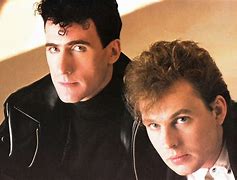
Their first single, “Electricity” was released in 1979 with mixed reviews. It was only with the release of “Enola Gay” that the group gained traction in Europe. The group released no less than 7 albums during the decade.
After Pacific Age, their seventh album, the band experienced a lull of five years. In 1991 the electronic music gurus stormed back onto the scene with the album Sugertax.
Studio albums
- Orchestral Manoeuvres in the Dark (1980)
- Organisation (1980)
- Architecture & Morality (1981)
- Dazzle Ships (1983)
- Junk Culture (1984)
- Crush (1985)
- The Pacific Age (1986)
- Sugar Tax (1991)
- Liberator (1993)
- Universal (1996)
- History of Modern (2010)
- English Electric (2013)
- The Punishment of Luxury (2017)
Orchestral Manoeuvres in the Dark (album)

The self-titled debut album by OMD, Orchestral Manoeuvres in the Dark (album) was released on 22 February 1980. Recorded in Liverpool at the group’s studio. It reached number 27 on the UK Album Charts. Two singles on the album became instant hits. Electricity and Messages. The latter reached number 13 on the singles chart.
Organisation

Organization is the group’s second studio album. Released on 26 September 1980, it was well-received, but only “Enola Gay” reached number eight on the singles chart.
Architecture and Morality

The third studio album by OMD was released on 6 November 1981. The evolution of the band continued with this album, with choral undertones and new instruments. The album spawned three hit singles. Maid of Orleans, Joan of Arc, and Souvenir.
Dazzle Ships

Dazzle Ships was released on 4 March 1983 as the fourth studio album. Two singles came from this album, “Genetic Engineering” and ” Telegraph”. The album reached position 5 on the UK Album Charts and remained on the charts for 20 weeks.
Junk Culture

The fifth studio album. Junk Culture was released on 30 April 1984 by Virgin Records. The album boasted four singles. Tesla Girls, Locomotion, Never Turn Away, and Talking Loud And Clear.
Crush

Crush would be the sixth studio album by OMD and was released on 17 June 1985. Notable singles on the album was So In Love, Secret, and La Femme Accident.
The Pacafic Age

The seventh and last album to be released during the eighties. The Pacific Age was released on 29 September 1986. the album spawned two hits. (Forever) Live And Die and We Love You. After this album, there was a five-year lapse before the band released a new production.